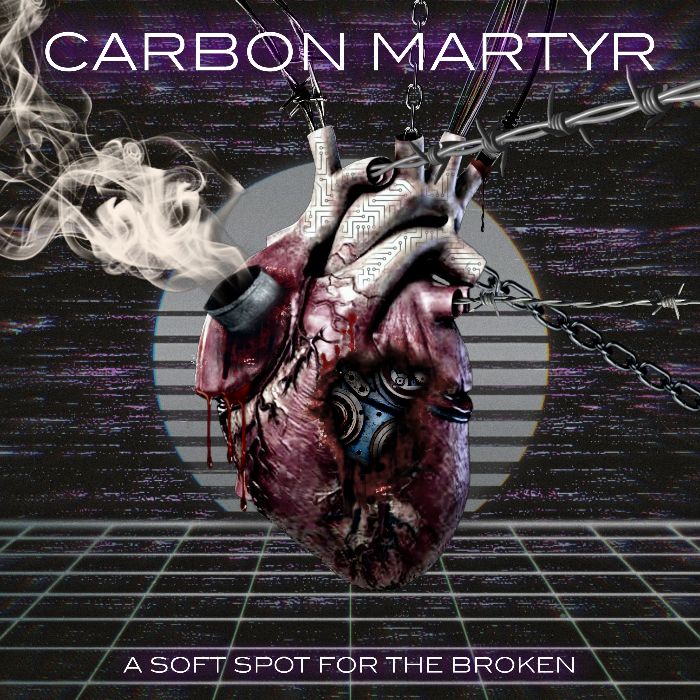
Toronto-based alternative/industrial band CARBON MARTYR have just unleashed their debut full-length album, A Soft Spot For The Broken.
A Soft Spot For The Broken: The underlying message revolves around mankind and technology. This manifests in a few different ways, from thoughts of a future where we become over-dependent on technology, to simpler ideas like social media addiction, information manipulation and group identity trends.
The album also explores some spiritual questions relating to our constantly changing relationship with the world around us.
A Soft Spot For The Broken is available in digital format.
For fans of: KMFDM, NIN & CHEMLAB
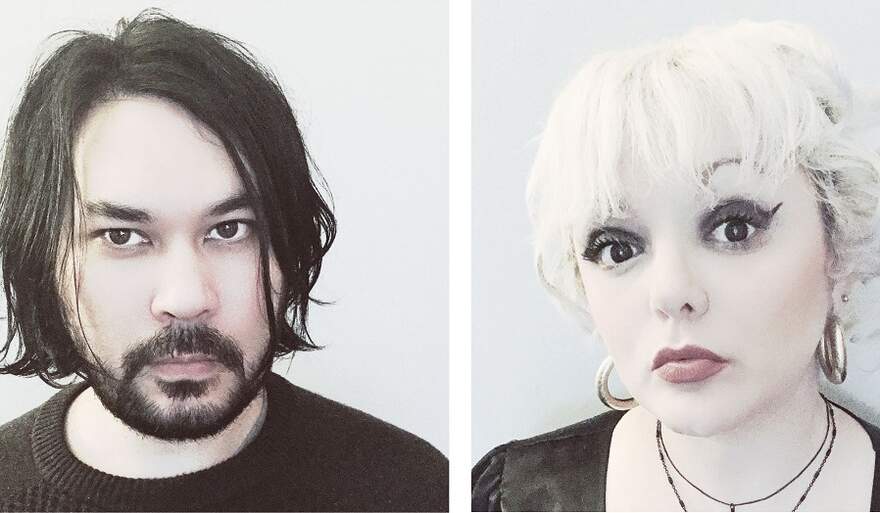
Darkwave Duo Band HANGING FREUD Speaks Of Loss And Transformation with 'Persona Normal'
Glasgow based darkwave/post-punk duo Hanging Freud have just unveiled their sixth full-length album Persona Normal. The band states: "We were living between the UK and Brazil, going back and forth. These were two societies going through extreme change. The whole world was changing in a way that felt scary."
Some themes of Persona Normal deal with detachment, dissociation, what it means to be human, political issues and about strong, irrational cults. These are approached in tracks like “I beg you” and “We don’t want to sleep”. Persona Normal is also a record about transformation and growth, accepting losses and coming to terms with the loss of innocence.
Persona Normal is available now in physical and digital formats on HANGING FREUD's label, Tiny Box. Persona Normal was written, produced and recorded by the duo with mastering duties by James Plotkin (Khanate).
For fans of: THE CURE, COCTEAU TWINS & CRANES

On this day, 30 years ago, Kraftwerk released their remix album The Mix. It was released on 11 June 1991 and featured re-recorded and, in some cases, re-arranged versions of a selection of songs which were released on their previous albums.
Ralf Hütter stated in interviews that he regarded The Mix as a type of live album, as it captured the results of the band's continual digital improvisations in their Kling Klang studio. The band had made a return to the stage in 1990, after a nine-year hiatus from touring, and since then the band's live setlist has used arrangements drawn from The Mix rather than the original recordings. As the band didn't want to release a traditional "Greatest Hits" or "Best of" collection they opted for 'The Mix'.
At the time, the band were in the process of reconfiguring their Kling Klang studio from analog to digital recording technology; integrating MIDI into their setup and creating sound archives from their original master tapes that were stored onto computers. This proved to be an ongoing task, as new upgrades and equipment were continually made available in the years following the album project. Despite no new, original recorded material or live tours outside of Europe, Ralf Hütter did not want Kraftwerk to appear defunct to the public.
The album's production is credited to Ralf Hütter, Florian Schneider, and Fritz Hilpert, the latter of whom had replaced percussionist and stage set designer Wolfgang Flür after Flür left the group in 1987. Karl Bartos also left the band in 1991 and was replaced by Fernando Abrantes. Bartos claimed in later interviews that much of his programming work was still featured on The Mix, uncredited.
The album received rather mixed reception on its release. Although many music magazines and citric rated the album from good to very good, many fans were disappointed at the lack of new compositions and, moreover, the production values of the re-recorded tracks did not strike many listeners as particularly cutting edge, something which Kraftwerk had previously been renowned for. The Mix was created entirely digitally, albeit during a period when the technology had yet to reach its maturity, and thus featured a sound which many listeners tend to find somewhat "sterile" compared to the analogue electronics employed on most of Kraftwerk's previous recordings of these songs. Nevertheless, The Mix placed first in The Wire's year-end poll, the first time the magazine—previously known for its focus on jazz—opened up an all-genre category.
The album has been released in both an English and German sung version and on various different formats like double 12" vinyl, Cassette and CD and was officially re-released in 2009.
The Mix - Tracklist
1. The Robots / Die Roboter 8:56
2. Computer Love / Computerliebe 6:35
3. Pocket Calculator / Taschenrechner 4:32
4. Dentaku / Calculator 3:27
5. Autobahn 9:27
6. Radioactivity / Radioaktivität 6:53
7. Trans-Europe Express 3:20
8. Abzug 2:18
9. Metal on Metal / Metall auf Metall 4:58
10.Home Computer / Heimcomputer") 8:02
11.Music Non Stop / Musik Non-Stop 6:38
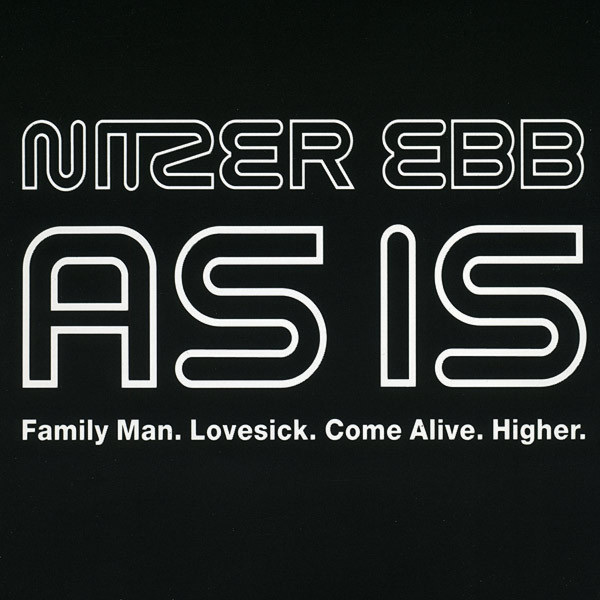
On this day, 29 years ago, Nitzer Ebb released the 'As Is' EP (10 June 1991), prior to their fourth studio album 'Ebbhead', on 7" vinyl, 12" Vinyl, CD, and cassette through Mute Records (MUTE122).
The EP features four tracks, each mixed by a different artist / producer. The first track, 'Family Man' is the only one which was also featured on Ebbhead album, albeit in a different version. It was mixed by Jaz Coleman, vocalist and frontman of Killing Joke. The second track, 'Lovesick' was mixed by Flood who produced the band's second and third albums, Belief and Showtime as well as the previously mentioned Ebbhead. The third track, 'Come Alive' was mixed by Alan Wilder of Depeche Mode, who would eventually be hired to co-produce the Ebbhead album. The last track, 'Higher' was mixed by Barry Adamson and Paul Kendall (PK). Barry Adamson was the bassist for Howard Devoto's Magazine and Nick Cave and the Bad Seeds and PK is an engineer/producer who has worked mainly for Mute Records on various Depeche Mode and Flood projects.
As Is (tracklist)
1. Family Man 3:56
2. Lovesick 4:00
3. Come Alive 6:12
4. Higher 5:50
Nitzer Ebb
Bon Harris – programming
Douglas McCarthy – vocals
Julian Beeston – additional drums and percussion
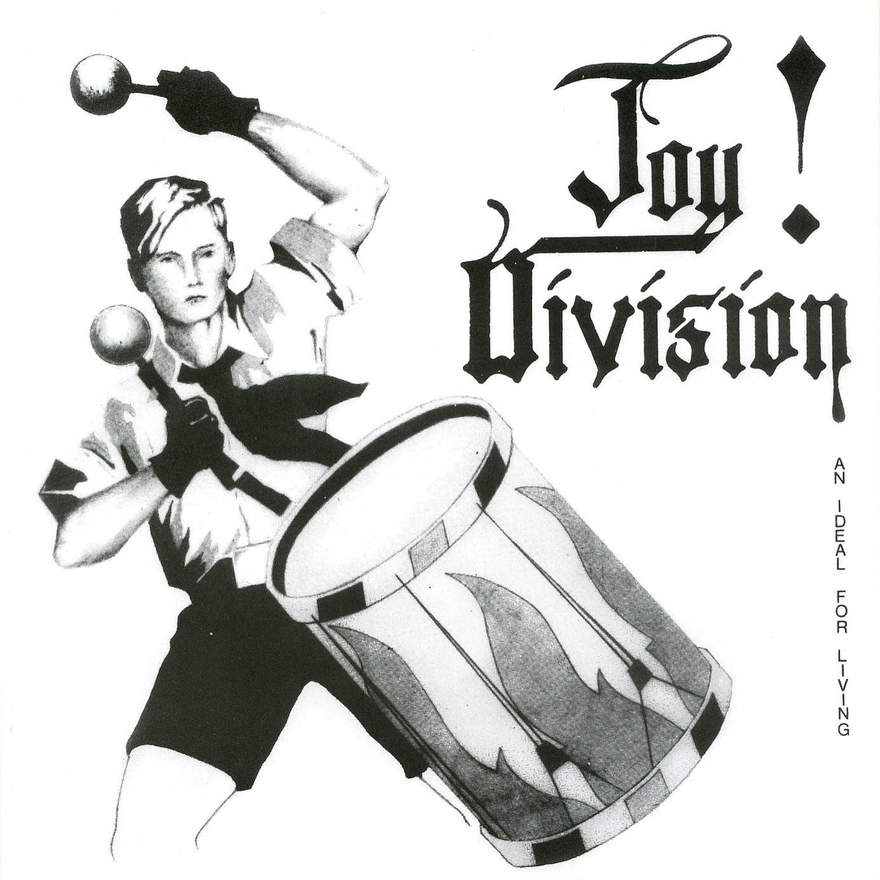
Today, 43 years ago, Joy Division self-released their very first 7' EP, An Ideal For Living!
Today, 43 years ago, Joy Division self-released their very first EP, An Ideal For Living! All four tracks were recorded in just one day at the Pennine Sound studios in Oldham, UK, on 14th December 1977 and released as a 7” on the band’s own Enigma label. The band self-financed this recording on a budget of £400.
The original release was pressed as 1000 copies and sold out by September the same year.
While the band was still known as Warsaw during the recording sessions for this release, they changed their name to Joy Division before the release took place.
The sleeve was printed on a 14' x 14' piece of thin cardstock and then folded into four squares. The front cover has a black-and-white Hitler Youth member beating a drum, which was drawn by guitarist Bernard Sumner and their bandname printed in a German gothic style blackletter font. The cover design, coupled with the nature of the band's name, fuelled controversy over whether the band had Nazi sympathies. When the EP was re-released on 12-inch vinyl, the original cover was replaced by artwork featuring scaffolding.
Numerous counterfeit editions of this release exist. Only the original vinyl has serrated vinyl around the label and different contours on the label.
Today, original copies are being traded between collectors and fans for prices from € 1500 to a stunning almost € 3000!
An Ideal For Living - Tracklist
|
A1 |
Warsaw |
|
|
A2 |
No Love Lost |
|
|
B1 |
Leaders Of Men |
|
|
B2 |
Failures |
|