
On November 1974, 51 years agao, German electronic pioneers Kraftwerk released their landmark fourth studio album, Autobahn. Though the exact day isn't precisely documented, this month remains forever tied to a record that would redefine not just the band’s sound, but the future of popular music.
Autobahn marked a turning point in Kraftwerk’s evolution. Previously rooted in experimental krautrock, the band—then a quartet including Ralf Hütter, Florian Schneider, Klaus Röder, and Wolfgang Flür—fully embraced a sleek, electronic-pop aesthetic. Produced jointly by the band and legendary engineer Conny Plank, the album was recorded at Kling Klang Studio in Düsseldorf and at Plank’s own studio in Cologne.
The title track, a hypnotic, 22-minute ode to the sensation of driving on Germany’s highways, became Kraftwerk’s first song with sung lyrics. Its repeated refrain, “Wir fahren, fahren, fahren auf der Autobahn…” (“We drive, drive, drive on the autobahn…”), evokes the hypnotic flow of a motorway journey. Edited down to around three-and-a-half minutes, the single version became a surprise international hit in 1975, charting in the U.S. (#25 on the Billboard Hot 100), Germany, Canada, and beyond.
At its core, Autobahn was more than just a song or album—it was a vision. Kraftwerk sought to capture the mechanical beauty of modern life: the hum of engines, the whirring of tires, the rhythmic pulse of motion. It was electronic music as transportation, in both metaphor and reality.
Over time, Autobahn earned its place as a foundational work in electronic music. Its influence rippled across genres—from synth-pop and new wave to techno and hip-hop. The album’s blend of minimalist synthesisers, repetitive drive, and futuristic aesthetics laid the groundwork for countless artists to come.
Fifty years later, in 2025, Kraftwerk celebrated the album’s anniversary with three new editions—featuring a Dolby Atmos mix, a 12″ picture-disc vinyl, and a Blu-ray release—revisiting the original 16-track master tapes to bring Autobahn into the modern era.
In short: around this day, approximately 50 years ago, Autobahn first hit the world—and changed our sonic landscape forever.
Autobahn Lyrics
Wir fahren, fahren, fahren auf der Autobahn Wir fahren, fahren, fahren auf der Autobahn
Vor uns liegt ein weites Tal Die Sonne scheint mit Glitzerstrahl
Wir fahren, fahren, fahren auf der Autobahn Wir fahren, fahren, fahren auf der Autobahn
Fahrbahn ist ein graues Band Weiße Streifen, grüner Rand
Autobahn - Tracklist
| A | Autobahn | 22:30 | |
| B1 | Kometenmelodie 1 | 6:20 | |
| B2 | Kometenmelodie 2 | 5:44 | |
| B3 | Mitternacht | 4:40 | |
| B4 | Morgenspaziergang | 4:00 |
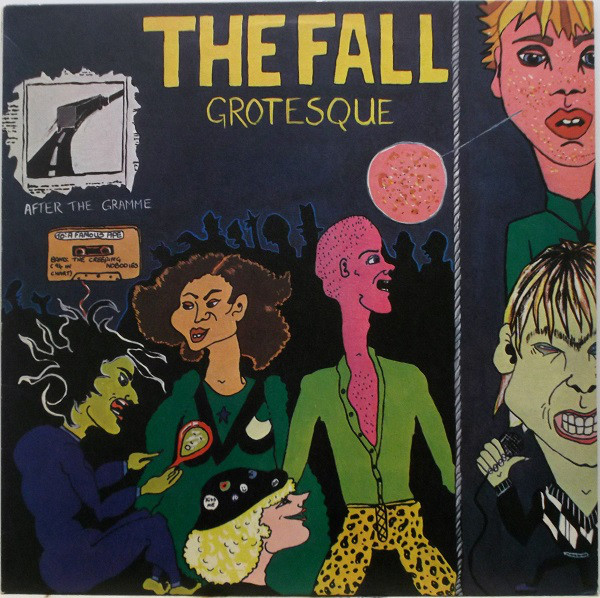
On this day, 45 years ago, British Post-punk band The Fall released their third studio album Grotesque (After The Gramme) - 17 November 1980. It was their first studio album released by the Rough Trade Records label.
The album was preceded by two acclaimed singles, "How I Wrote 'Elastic Man'" and "Totally Wired", which did not appear on the original pressing but were subsequently included on CD reissues of the album.
The Fall's music at the time was described as "Mancabilly", and by singer Smith himself as "Country 'n' Northern".
The album was generally well received and highly acclaimed by the music press, rating it with four to five out of the five star ratings.
The album reached number one on the UK Independent Album Chart for 3 sequential weeks, spending 29 weeks on the chart in total.
Grotesque (After The Gramme) (ROUGH 18 - LP)
| A1 | Pay Your Rates | |
| A2 | English Scheme | |
| A3 | New Face In Hell | |
| A4 | C'n'C-S Mithering | |
| A5 | The Container Drivers | |
| B1 | Impression Of J. Temperance | |
| B2 | In The Park | |
| B3 | W.M.C. - Blob 59 | |
| B4 | Gramme Friday | |
| B5 | The N.W.R.A. |

The Mind Is a Terrible Thing to Taste – Ministry (1989)
Released on November 14, 1989, The Mind Is a Terrible Thing to Taste stands as a defining statement in industrial metal, cementing Ministry as one of the genre’s most influential bands. It was the group’s fourth studio album, following 1988’s The Land of Rape and Honey, and marked a further step away from the synth-heavy new wave sound of their early work toward a harsher, more aggressive fusion of metal, punk, and electronic noise.
Led by Al Jourgensen, Ministry dove deep into themes of social decay, political corruption, drug addiction, and inner turmoil. The album’s title, a dark parody of the United Negro College Fund slogan “A mind is a terrible thing to waste,” reflects its confrontational tone. Musically, it combined machine-like drum programming, grinding guitars, and distorted vocals, creating a sound both chaotic and precise — a soundtrack for a collapsing world.
The opening track, “Thieves,” bursts out with furious energy, its shouted refrain and metallic percussion setting the tone for the record. “Burning Inside” follows with relentless intensity, driven by Paul Barker’s bass and a riff that became one of Ministry’s most recognizable. Other highlights include “Breathe,” which mixes danceable rhythms with apocalyptic lyrics, and “So What,” a sprawling, menacing track that captures the band’s nihilistic ethos. The album closes with “Faith Collapsing” and “Dream Song,” which veer into haunting, atmospheric territory.
Recorded amid chaos, substance abuse, and creative tension, The Mind Is a Terrible Thing to Taste nonetheless achieved remarkable coherence. Its raw energy and mechanical precision influenced countless acts across industrial, metal, and electronic music — from Nine Inch Nails and Fear Factory to Rammstein. The accompanying 1990 “Mind Is a Terrible Thing to Taste” tour (documented on the live album and video In Case You Didn’t Feel Like Showing Up) showcased Ministry at their most ferocious, with a full stage assault of lights, noise, and aggression.
Today, 36 years later, the album still remains a cornerstone of industrial metal, a brutal yet intelligent work that captures the anxiety and rage of the late 20th century — and still sounds disturbingly relevant decades later.
Ministry - Burning Inside (CD/LP - Sire)
| 1 | Thieves | 5:02 | |
| 2 | Burning Inside | 5:20 | |
| 3 | Never Believe | 4:59 | |
| 4 | Cannibal Song | 6:10 | |
| 5 | Breathe | 5:40 | |
| 6 | So What | 8:13 | |
| 7 | Test | 6:04 | |
| 8 | Faith Collapsing | 4:01 | |
| 9 | Dream Song (CD only bonus track) | 4:48 |
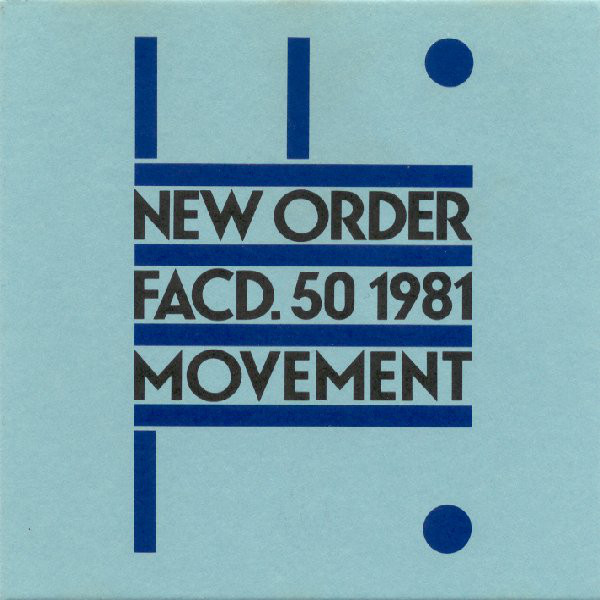
Movement is the debut album by New Order, released on 13 November 1981 by Factory Records. The album was produced by Martin Hannett who also produced the previous Joy Division albums and releases. At the time of its release, the album was not particularly well-received by critics or audiences, only peaking at number 30 on the UK Albums Chart. However, retrospective critical reception has been very positive.
After the suicide of Joy Division's singer Ian Curtis in May 1980, and the subsequent shock for those surrounding him, remaining members Bernard Sumner, Peter Hook and Stephen Morris elected to carry on, albeit under a new name – New Order. With the exception of two songs, "Ceremony" (first played live at Joy Division's very last gig, a bit more than two weeks before Curtis's death) and "In a Lonely Place" (unreleased, but demoed in the studio), all the material played would be new.
A couple of songs on Movement stem from the initial songwriting session the band undertook in the summer of 1980.
Bernard Sumner took the main vocalist role with Peter Hook as back-up though the latter sang lead on "Dreams Never End" and "Doubts Even Here”.
Musically the album situated in between Joy Division's post-punk sound and the synth-pop style that would happen to define New Order and influence pop music for decades".[10]
In 2008 and 2015 the album was remastered and released in different formats (Digital/CD/12”).
References to Ian Curtis appear on the songs "ICB" (rumored to be an acronym for 'Ian Curtis Buried', but confirmed by Peter Hook in a 2013 interview) and "The Him".
The album cover was designed by Peter Saville and is based on a poster by the Italian Futurist Fortunato Depero.
The shape created by the top three lines is an 'F' (lying on its back), which refers to Factory Records/Factory Communications Limited and the bottom two lines create an 'L' (lying on its front), the Roman numeral 50, the original catalogue was FACT 50.
Movement - Tracklist
| Dreams Never End | 3:13 |
| Truth | 4:37 |
| Senses | 4:45 |
| Chosen Time | 4:07 |
| ICB | 4:33 |
| The Him | 5:29 |
| Doubts Even Here | 4:16 |
| Denial | 4:20 |
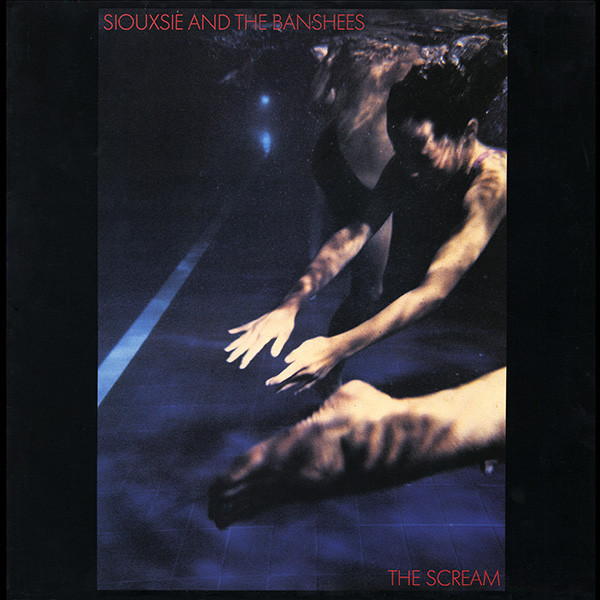
Today, 47 years ago, Siouxsie & The Banshees released their debut album Scream!
The Scream is the debut album by Siouxsie and the Banshees. It was an almost instant commercial success, peaking at No. 12 on the UK Albums Chart and was recorded in only one week and mixed in three during August 1978. The album was released on 13 November 1978 by Polydor. Before the album's release, the band had developed a strong reputation as a live act, and had achieved a Top 10 UK single with "Hong Kong Garden”, a track which did not appear on the original album, but was added not much later to most others issues of Scream.
Upon release, The Scream was widely acclaimed by critics. It was also a commercial success, peaking at No. 12 in the UK Albums Chart. The album is regarded as a landmark of post-punk.
Late 1977 and early 1978, Siouxsie and the Banshees received major press coverage but failed to secure a recording deal. A fan undertook a graffiti campaign in London, spraying the walls of the major record companies with the words "Sign the Banshees: do it now".[2] Polydor finally signed them in June.
J. G. Ballard and William Burroughs provided the reference points for the lyrics of The Scream.
Since its release, The Scream has received a number of accolades from the music press. NME rated it at No. 57 in their "Writers All Time 100 Albums" list in 1985. Uncut magazine placed it at No. 43 in their list of the 100 greatest debut albums. It was featured in the book 1001 Albums You Must Hear Before You Die.
The Scream placed the group among the pioneers of post-punk, as Robert Smith of the Cure said:
"When The Scream came out, I remember it was much slower than everybody thought. It was like the forerunner of the Joy Division sound. It was just big-sounding."
Joy Division's Peter Hook, who saw the band in concert in Manchester in 1977, said about The Scream: "Siouxsie And The Banshees were one of our big influences, The Banshees first LP was one of my favourite ever records, the way the guitarist and the drummer played was a really unusual way of playing."
The Scream had a strong impact on other musicians. Massive Attack covered and sampled "Metal Postcard (Mittageisen)" on their song "Superpredators (Metal Postcard)" in 1997.
Scream (1978 LP) - Tracklist
| A1 | Pure | 1:50 |
| A2 | Jigsaw Feeling | 4:38 |
| A3 | Overground | 3:48 |
| A4 | Carcass | 3:50 |
| A5 | Helter Skelter | 3:48 |
| B1 | Mirage | 2:46 |
| B2 | Metal Postcard (Mittageisen) | 4:16 |
| B3 | Nicotine Stain | 2:56 |
| B4 | Suburban Relapse | 4:10 |
| B5 | Switch | 6:50 |