
The Weathermen have remastered and released their live backing track instrumentals!
The Weathermen, featuring Bruce Patient, who also took care of Tuxedomoon’s visual performance aspects with his films, lights and theatrical act, and Jean-Marc Lederman, the Belgian hero who worked with Front 242, Fad Gadget and Alain Bashung in the 80s, also known as Kid Montana. Together they made electro with a twist and even scored a world (club) hit with 'Poison'.
The Weathermen, named after an American extreme left-wing organization that once committed attacks on the Capitol and the Pentagon, finally came to an and when Bruce Patient died in 2016 but luckily Jean-Marc Lederman still has a lot of gems in his vault. Among those gems, the original live-backing tracks that were used during the scarce tours the band made that give us a view of the disturbed living environment of the duo. With these backing tracks, two limited editions are now made available through Dans Les Profondeurs, the archive-sub-label of Wool-E Discs: a double CD with both the backing tracks and a complete live performance that was recorded in Hoogstraten in 2009 and a vinyl LP containing 6 tracks and which obviously comes with a download card for the full 22 backing tracks.
Don’t hesitate too long as both items are much wanted and very limited.
De Nederlandstalige versie van dit nieuws item kan lezen bij onze collega's www.darkentries.be
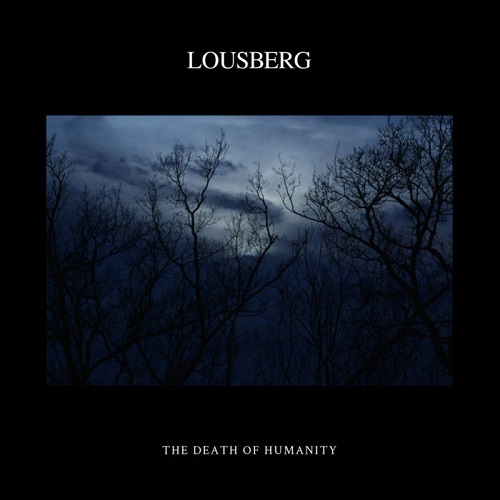
Dunkelheit Productions is proud to present the new, epic 25-minute release from Lousberg, "The Death Of Humanity;" a dark ambient masterpiece.
For fans of: Raison d'être, Klaus Schulze & Brian Eno
"The Death Of Humanity" will be available in CD edition on 1.1.2019 and vinyl edition mid-February.
Digital edition is available NOW at: https://dunkelheitprod.bandcamp.com/.
With “The Death Of Humanity,” Lousberg achieves what most composers fail to do in a lifetime, much less a career. Transcending styles of dark ambient and dungeon synth, Lousberg is responsible for the merger of worlds; both specific and abstract. Intensely contemplative, “The Death Of Humanity” offers itself as an existential soundtrack.
Lousberg guides a select few textures through landscapes both subterranean and otherworldly, somehow molding them as one in a 25 minute epic composition. Essentially, “The Death Of Humanity” exists somewhere between heaven and earth; between the universe and darkest corner of a remote location of the listener’s room. Warm, low tones merged with high, cold planes. Through cavernous landscapes and perpetual colonnades. Through timeless loneliness and endless emotional collapse, what Lousberg creates is both intensely human and otherworldly.
Lousberg gives soundtrack to previously unchartered parts of the soul. Is this “The Death Of Humanity” or an “imitation of life”?
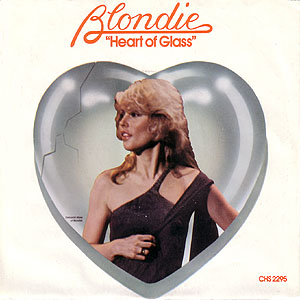
This month forty-years ago Blondie released their punk-pop crossover in the danceable “Heart Of Glass”, although eventually reaching the number one slot in both the U.K and U.S charts later in the year along with grabbing top spots in five other countries. The days of Blondie being simply a cult New York act ended and instead was replaced by mainstream stardom.
A perfect slice of disco was the release that would secure the legacy of Blondie, although not a new track its roots hail back to the mid-seventies. Inspired in some way by the dance floor filler “Rock The Boat”, it did appear on the bands seventy-eight release ‘Parallel Lines’, in-fact ‘Heart Of Glass’ was the third release from the very successful album.
‘Heart Of Glass’ was the result of Debbie Harry’s lyrics and Chris Steins experimentation, far from the sound which echoed within the walls of CBGB’s at the time.
Chris Stein:”When Debbie and I were living in our top-floor apartment at 48 W. 17th St., I often messed around on a borrowed multitrack tape recorder. It let me record a rhythm guitar track and then layer melody and harmony lines on top. I wrote and developed my songs this way. In the summer of 1974, I wrote a song and referenced the catchy feel of “Rock the Boat” by the Hues Corporation, which was a big hit then. Debbie and I began calling it “The Disco Song.”
Debbie Harry:”The words I came up with expressed a very high school kind of thing, of falling in and out of love and getting your feelings hurt. But instead of dwelling on the pain, the words sort of shrugged off the breakup, like, “Oh, well, that’s the way it goes.”
Blondie did come under fire for selling out as it was seen, although, they had covered 'Lady Marmalade' and 'I Feel Love' at gigs, even Debbie Harry proclaimed her love for disco's production superhero Giorgio Moroder, in the scheme of Blondie’s music this was a natural progression for the band.
The sound of Blondie hinged very much on the raw punk sound combined with R&B and the girl groups of the sixties such as the Shangri-Las, given the heights which German krautrock had on music in general by crossing that commercial barrier, unknowingly or not, Blondie and the song itself did help pave the way for EDM and the the future.
Lyrics;
Once I had a love and it was a gas
Soon turned out had a heart of glass
Seemed like the real thing, only to find
Mucho mistrust, love's gone behind
Once I had a love and it was divine
Soon found out I was losing my mind
It seemed like the real thing but I was so blind
Mucho mistrust, love's gone behind
In between
What I find is pleasing and I'm feeling fine
Love is so confusing there's no peace of mind
If I fear I'm losing you it's just no good
You teasing like you do
Once I had a love and it was a gas
Soon turned out had a heart of glass
Seemed like the real thing, only to find
Mucho mistrust, love's gone behind
Lost inside
Adorable illusion and I cannot hide
I'm the one you're using, please don't push me aside
We could've made it cruising, yeah
Yeah, riding high on love's true bluish light
Once I had a love and it was a gas
Soon turned out I had a heart of glass [radio version]
Soon turned out to be a pain in the ass [album version]
Seemed like the real thing only to find
Mucho mistrust, love's gone behind
In between
What I find is pleasing and I'm feeling fine
Love is so confusing there's no peace of mind
If I fear I'm losing you it's just no good
You teasing like you do.
Kevin Burke January 2019
Stein/Harry quotes courtesy of WSJ
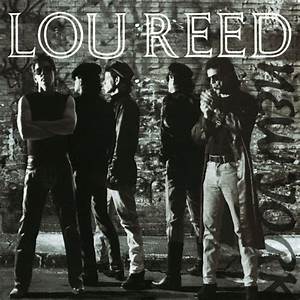
New York, both the backdrop and inspiration to some of Lou Reed's finest work, from the Velvet Underground's debut and right through his solo work,with the exception of the hard listening,and at times upsetting 'Berlin' album.
In 1989 however, Reed stunned both critics and fans with the release of the loose conceptual album simply titled 'New York'.
This was Reeds finest album as a solo artist and nobody seen it coming,having released albums of moderate appeal but poor reviews in the 1980s.
After his clean up and stint in rehab Reed was written off as a has been, hanging onto the shirttails of cult success with the Velvet Underground, which at this point was at its highest.
As the decade closed however Reed found himself on the cusp of both artistic integrity with mainstream success. The fourteen track album,a journey through the grime and good of New York City, cited as an almost spoken novel weighted in at a little under an hour ,with minimal production to add to the raw sound ,this was Lou Reed at his very best.
A band made up of two guitars,bass and drums,the vehicle he thrived on to snarl his vocals over both sides of the record,indeed ex-Velvet Mo Tucker contributed drums on parts of the album.
The sudden change and obvious maturity that fired Reed can be contributed to by two factors,or two losses rather,the death of Andy Warhol in February 1987 during a routine gallbladder surgery.
Warhols was of course the one time artistic guru of Reeds who not only encouraged his dark , twisted songwriting but influenced it and his ex-Velvets bandmate and muse Nico who suffered a heart attack and died in July 1988 in Ibiza.
These two losses in a short space of time made Lou Reed question his own mortality, instead of grieving he in turn threw himself into his songwriting, evident in the song cycle that this is clearly a man who had seen it and done it all and was now launching himself at the top of his game with an almost rebirth.
The album stutters to a start with one of Reed’s greatest songs,'Romeo Had Juliette', here he clearly sets the scene and prologues all that is to come;
"Caught between the twisted stars the plotted lines the faulty map
that brought Columbus to New York".
This vivid imagery used very easily paints pictures in the listeners mind in almost fictional noir movie.
The second single release ,'Dirty Boulevard’ reached the top of the modern rock U.S Billboard charts, a song starkly pointing the divide between the rich and poor of New York,but again widely praised and receiving airplay both through FM and MTV, this was not selling out however, grunge was right around the corner and Reed was already lighting the fires hailing the clever lyrics and guitar driven raw music which was to come.His friend and one time collaborator David Bowie,was already working in the same direction with the cyberpunk of Tin Machine.
The song subjects are both stark and nostalgic and at times the imagery can become overpowering, he keeps it together however through the pumping sound being delivered,'The last great American whale', Reed hits out at both the NRA and the treatment of native Americans,fearlessly without hiding either fact;
"The mayor's kid was a rowdy pig
spit on Indians and lots worse,
The old chief buried a hatchet in his head
life compared to death for him seemed worse".
Halfway through the album you soon discover that Reeds newfound leather skinned,sobriety suits him,a fact pointed to on the third single release ‘A Busload Of Faith', it's not a song of regret but more so of acceptance and the importance of his own life;
"You can't depend on your drinking,
You can't depend on your dope".
At last Reed was living up to the cult image created through his groundbreaking and highly influential releases with the Velvet Underground, this new found energy would continue right up until his death in 2013, leaving behind a more worthwhile legacy for a man who through his work in the 60's inspired more bands than the Beatles.
Kevin Burke 1/01/19

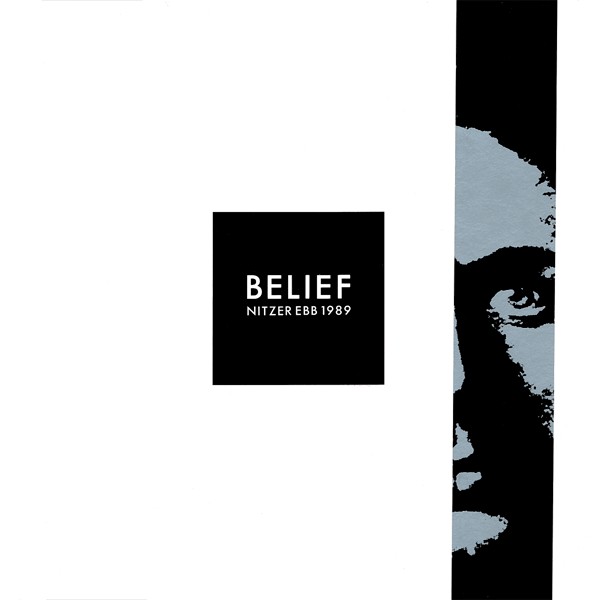
On this day, 30 years ago, Nitzer Ebb released their second studio album Belief!
On this day, 30 years ago, Nitzer Ebb released their second studio album Belief. On this album, released by Mute Records and produced by Flood, drummer Julian Beeston took over from David Gooday.
The album features one of NEB's most know dancefloor classics, Control I’m Here. This single was released almost three months before whilst the video got frequent rotation on MTV. Later that same year, the singles Hearts & Minds and Shame followed. The track T.W.A. is said to be inspired by the 1985 hijacking of TWA flight 847. While listening very carefully one can hear a crowd chanting ”Marg Bar Amrika' which means 'Death to America”.
Belief
Mute Records - STUMM 61
Released: 9 January 1989
Track listing:
- Hearts & Minds 3:45
- For Fun 3:03
- Control, I'm Here 3:52
- Captivate 3:57
- T.W.A. 5:00
- Blood Money 4:29
- Shame 4:03
- Drive 5:07
- Without Belief 4:16