This month 50 years ago KRAFTWERK released their second studio album KRAFTWERK 2
Kraftwerk 2 is the second studio album that was released under the moniker Kraftwerk. The album was written and performed by founding Kraftwerk members Ralf Hütter and Florian Schneider in late 1971, with the sessions produced by the influential Konrad "Conny" Plank. It was released by Philips in January 1972.
Hütter later commented in an interview: "Nobody wanted to play with us because we did all kinds of strange things...feedbacks and overtones and sounds and rhythms. No drummer wanted to work with us because we had these electronic gadgets."
Although one should expect the obvious, this album features no synthesizers, the instrumentation being largely electric guitar, bass guitar, flute and violin. The electronic tricks and experiments both gentlemen display here belong to the realm of 1960s tape-based music, with heavy use of tape echo, reverse playback and tape speed effects. Overall, the sound has a rather muted, twilit, dusky feel, similar in feel to "Megaherz" on Kraftwerk's debut album, as Hütter and Schneider explored the possibilities for electronic and auto-mechanical enhancement of their music.
The lengthy, almost side-long "Klingklang" which opens the album is notable for its use of a preset organ beatbox to provide the percussion track. A term which would later be used as their fifth virtual member in the shape of a recording studio.It starts with a clangourous Stockhausen-like metallic percussion montage and gives rise to the unmistakable Kraftwerk sound. Later, the song title also became the name of the band's own self-built studio, in Düsseldorf. "Atem" is a recording of breathing, while "Harmonika" features a tape-manipulated mouth organ.
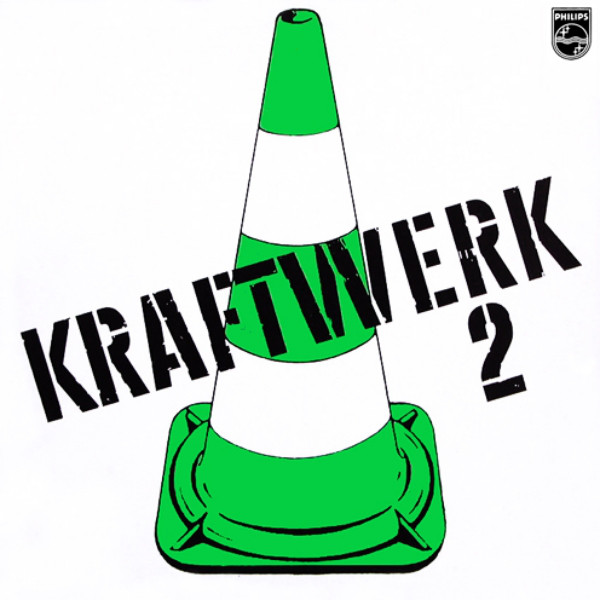
The cover design, by Ralf and Florian, further hints at conceptual art, being a repeat of the first album's pop art design – except this time fluorescent green replaces the red and the number '2' is added.
No material from this album has been performed in the band's live set since the Autobahn tour of 1975, and to date, the album has not been officially reissued on CD. The band is seemingly reluctant to consider the release as a part of their legacy
In interviews, Schneider described the first three Kraftwerk albums as "archaeology".
KRAFTWERK 2
A1. Klingklang 17:36
A2. Atem 2:57
B1. Strom 3:52
B2. Spule 5:20
B3. Wellenlänge 9:40
B4. Harmonika 3:17
Industrial Act PANIC LIFT Drops The Introspective & Melancholy, 'Pieces'
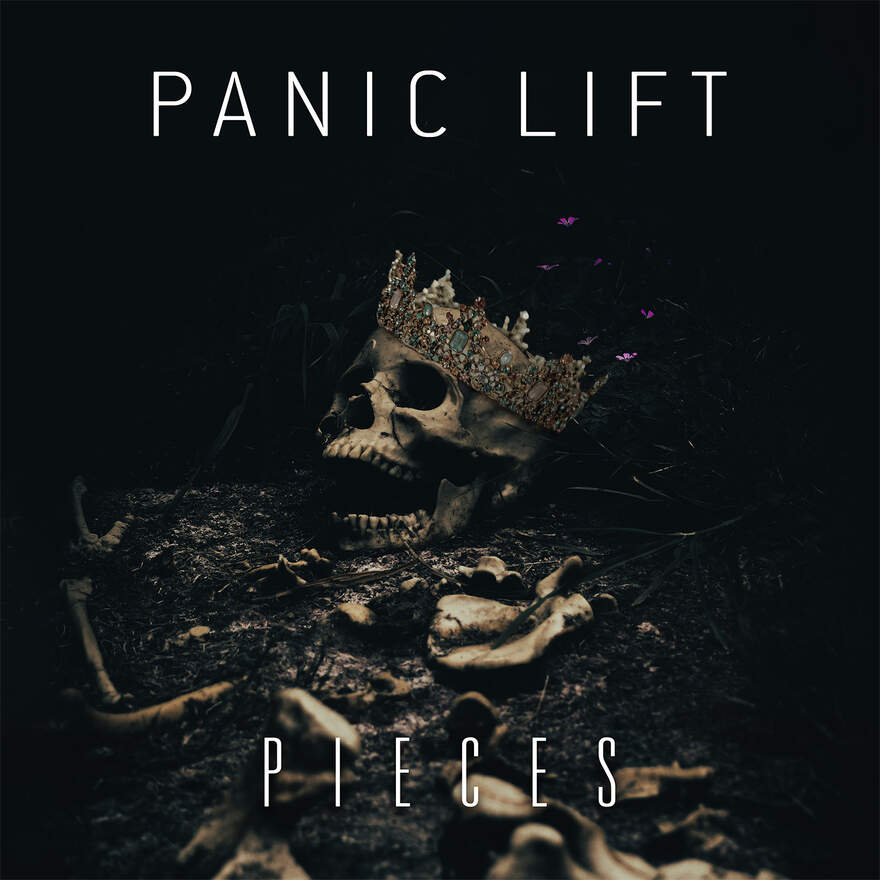
New Jersey Industrial act PANIC LIFT return to release the second installment in their five-part EP series titled Pieces; the follow up to this past summer's Split. Pieces showcases two new songs. "Disease Of Kings" and "Failure Principle" are both introspective and melancholy tracks with themes that revolve around stress, addiction, and self-image.
"Disease Of Kings" is an industrial rock sludgefest that incorporates symphonic keyboard melodies and a wall of guitars. The second track, a futurepop inspired dance floor smasher, "Failure Principle" features a thick synth bassline accompanied by soaring keyboard leads.
Also featured with the release is a limited-edition PANIC LIFT face mask to accompany you on your journeys through the current post-apocalyptic landscape.
For this release, PANIC LIFT enlisted remixers genCAB, Assemblage 23, and KALCYFR who each lend their talents to the two tracks.
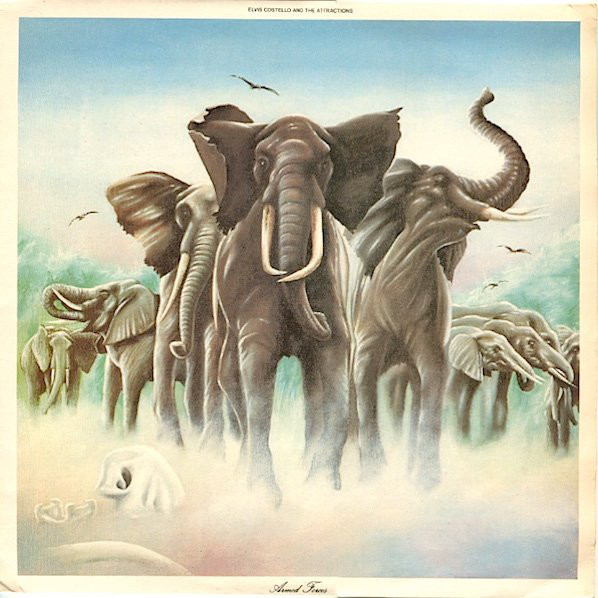
Elvis Costello, the Buddy Holly on acid, the Punk troubadour of the late nineteen-seventies, one of the most prolific and consistent artists of his generation.
To go through his canon of albums would be a long, although exciting adventure, but here we celebrate with the stand out, with the first record of his people discovered and latched onto, and one which is still listened to and love passionately “Armed Forces”.
Some have said this is one of the best albeit subtle political statements of the twentieth century, a bigger statement than one which the late Woody Guthrie would have attempted.
Wrapped in a fold back cover and front picture of elephants charging is an electrifying, rock steady album and an enigma to some albums in one that doesn't contain a dud track.
Released in January 1979, the working title says more than the given one; “Emotional Fascism”.
A daring album, one to dance to, this was the album where Elvis Costello came into his own as a songwriter, a melodic and textured work, hiding songs of a strong political nature, delivered with Costellos unique and demand to be listened to vocal.
Only two singles released; “Accidents Will Happen” the albums catchy opener and the number-two hit “Olivers Army”.
Based on a trip to Belfast, Costello being of Irish descent, “Olivers Army” remains one of Costellos most memorable songs.
The trip to Belfast opening his eyes to the young men, almost boys, armed and in uniform, from this was born his anti-occupation song.
A song about the young, working class men always sent to do the killing, name dropping along the way, apart from Belfast, ‘Checkpoint Charlie', Palestine, Cyprus and South Africa, wrapped nicely in bubblegum pop. Wether the listener knew or not is another story, but that was Costellos gift, the subtly.
The phrase 'White Nigger' remaining in the song when played on the airwaves for thirty years up until March 2013 when the BBC decided to censor the phrase, leading to a backlash as it damaged the songs intentional anti-war, anti-racisim message.
The album 'Armed Forces' produced in full by the irrefutable Nick Lowe,the 'Stiff Records' in house producer, but a notable pub-power-pop rocker similar to the style of Elvis Costello so an understanding of the sound and handling of the songs was best served by Lowe.
Although having produced the previous albums by Elvis Costello, Nick Lowe is also responsible for the production on The Damned’s first single and albums,aswell as other Stiff and associated acts. These including Wreckless Eric, The Pretenders, Dr Feelgood and of all artists Johnny Cash.
The other significant footnote of this album is it lists The Attractions as the band, although their second album with Costello, 'Armed Forces' is the first album to state them on the cover.
This artistic work is a combination of everything a record should be, no filler and a deep thinking political statement, but not one that overpowers the positivity of the album, so if you haven't heard it this is the call to dig and find it.
[Kevin Burke]
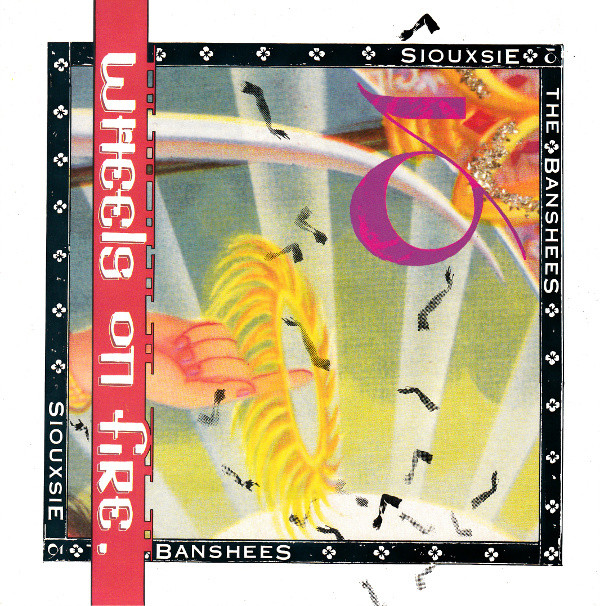
On this day, 35 years ago, Siouxsie & The Banshees released ‘Wheel’s On Fire’ (5 January 1987). It was the preliminary and first single of their upcoming all-covers album, Through the Looking Glass.
It was released by Polydor Records on 7” and 12” vinyl and climbed to number 14 on the UK single charts. Although the original song was composed by Bob Dylan, it had been said the band was not aware of this before recording the song. Apparently they decided to cover this song because they liked Julie Driscoll, Brian Auger & The Trinity's version released in 1968.
Wheel’s On Fire (7”)
A This Wheel's On Fire 4:04
B Shooting Sun 4:10
Wheel’s On Fire (12”)
A. This Wheel's On Fire (Incendiary Mix) 7:32
B1. Shooting Sun 4:44
B2. Sleepwalking (On The High Wire) 4:10
Wheel’s On Fire (Lyrics)
If your memory serves you well
We were gonna meet again and wait
So I'm goin' to unpack all my things
And sit before it gets too late
No man alive will come to you
With another tale to tell
But you know that we shall meet again
If your memory serves you well
This wheel's on fire
Rolling down the road
Best notify my next of kin
This wheel shall explode
If your memory serves you well
I was gonna confiscate your lace
And wrap it up in a sailor's knot
And hide it in your case
If I knew for sure that it was yours
But it was oh so hard to tell
And you know that we shall meet again
If your memory serves you well
This wheel's on fire
Rolling down the road
Best notify my next of kin
This wheel shall explode
If your memory serves you well
You'll remember that you're the one
That called on me to call on them
To give you your favors done
And after every plan had failed
And there was nothing more to tell
You knew that we would meet again
If your memory served you well
This wheel's on fire
Rolling down the road
Best notify my next of kin
This wheel shall explode
If your memory serves you well
If your memory serves you well
Songwriters: Richard Danko / Bob Dylan
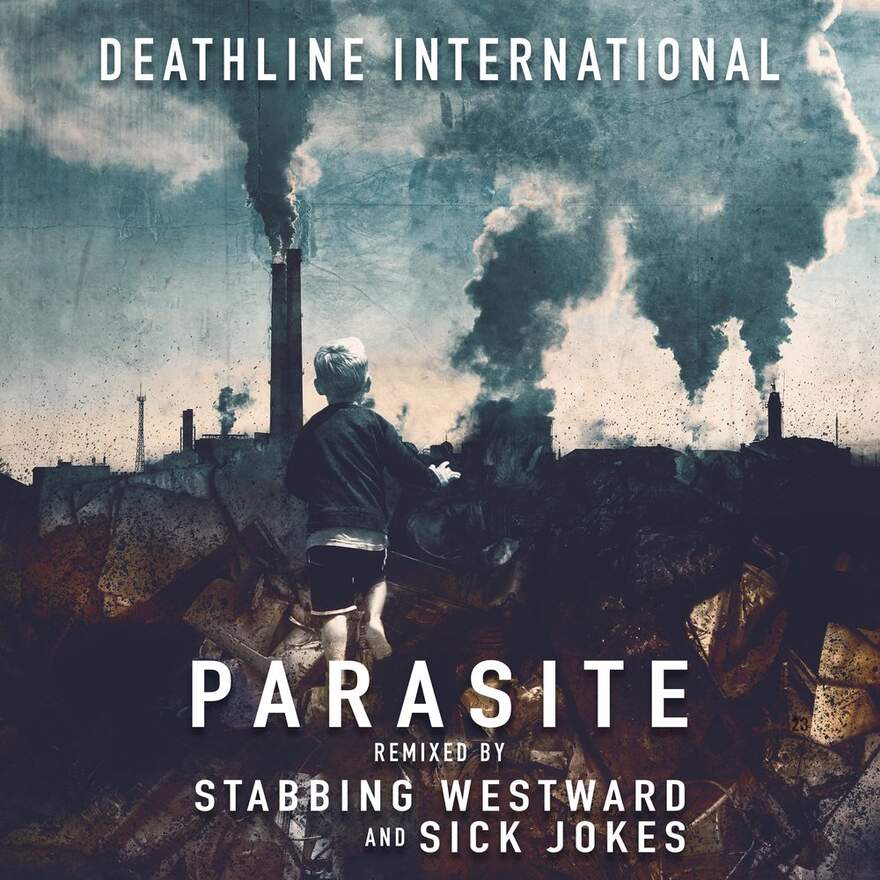
Industrial Rock Band DEATHLINE INTERNATIONAL Addresses Climate Change With 'Parasite'
Industrial Rock Band DEATHLINE INTERNATIONAL's single “Parasite” addresses a problem that was once in the rear mirror, but now starts to loom large in our life. The band is based in California, a state that is ravaged by wildfires and water shortages on an unprecedented scale so it is not surprising that this is on their mind.
With the help of Christopher Hall [STABBING WESTWARD], John Fryer, and SICK JOKES, DEATHLINE INTERNATIONAL has created the sonic equivalent of a flashing warning sign.
The STABBING WESTWARD mix is a driving dance monster that sets the aggressive tone for the single. The John Fryers Single mix is more intimate and has more somber undertones. Labelmates SICK JOKES deliver a sonic assault weapon-grade mix that leaves nothing but scorched earth behind.
DEATHLINE INTERNATIONAL produced a short film based on the STABBING WESTWARD remix which brings a visual statement to the message of climate change.