25 years Divine Rapture | Celebrating The Siouxsie and the Banshees 1995 and final album!
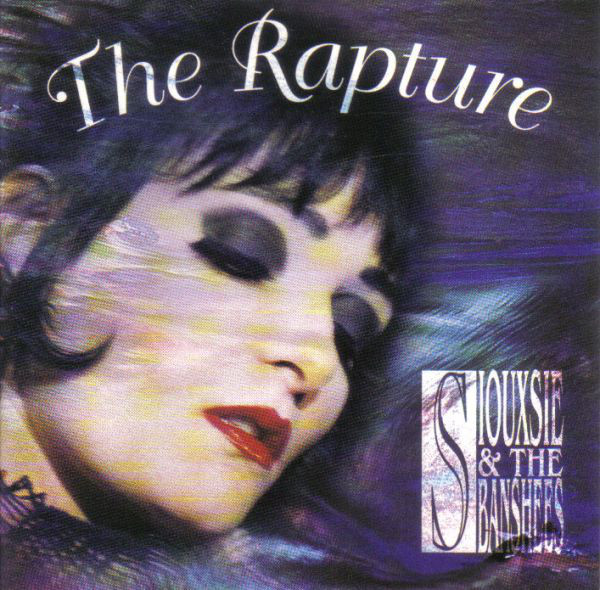
Today, 25 years ago Siouxsie and the Banshees released their eleventh and final studio album in the majestically divine “The Rapture”. This is a erotic-beast created over a year and a half with the Velvet Underground’s John Cale producing and mixing all but three tracks.
This however was not the dark-gothic masterpiece which people thought would close the career of those who forged that very path, instead it contains some of the more lighter elements in The Banshees work.
A natural progression is heard from their acclaimed 1991 offering “Superstition”.
It continues with the same flowing themes, Siouxsie Sioux as the confident, scorned femme-fatale, a chanteuse and not just a punk revolutionary, Sioux moved forward along with the sound built behind her.
From the start and throughout the twelve-track song cycle there is an experimentation, the title track itself is an eleven-minute journey that twists and turns through a haunting atmosphere like a wounded animal.
Along with “The Rapture” another gem to behold is the magnificent and melodic “Stargazer”, a very unnerving though accessible sound breaks through. The pleasures of “Sick Child” and the sublime “The Double Life” make up for any lack of dark joy an often criticism of “The Rapture”.
The last studio hurrah from Siouxsie And The Banshees is definitely worth a revisit, granted it is not cut from the same menacing cloth as “Juju” or “Peepshow”, nonetheless it is a staggeringly beautiful piece of work which shows great passion and depth, displaying Siouxsie Sioux as a singer and not just a screamer.
The Rapture, verse
“Wondering if I dare to say your name
Wondrous thoughts embalmed avow you came
By the crescent disc rising amethyst
How can love remain the same unchanged?
Moonlight plays upon this sunken brow
Midnight ink bleeds wet mercurial clouds
By the crescent disc rising amethyst
Somnambulist unharnessed storms the plow
By the crescent disc rising amethyst
How can love remain the same unchained?”.
The Rapture (Original 1995 Track List)
01. “O Baby”
02. “Tearing Apart”
03. “Stargazer”
04. “Fall from Grace”
05. “Not Forgotten”
06. “Sick Child”
07. “The Lonely One”
08. “Falling Down”
09. “Forever*”
10. “The Rapture”
11. “The Double Life”
12. “Love Out Me”
[Kevin Burke]

The Dreams Will Always Linger | Remembering Dolores O’Riordan - 2 Year Anniversary
In the last number of years music fans have suffered loss after loss, idols who it seemed would outlive time itself passed into the ether. The rapture of legends was unforgiving to our heroes, the immortal figures such Prince, David Bowie, Chris Cornell, George Michael along with a greater parade of souls left us with their legacy in music.
Only a year ago today it home that another shining talent had succumbed and slipped away unexpectedly.
The soaring passion of Dolores O'Riordan is measured with the uneasy and ripped emotions which heralded her passing. An obvious and true talent such as hers can sometimes bring fourth turmoil as if you knew them personally. When you question why, you may feel this way, the answer is simply through a relatable appreciation of the personal words Dolores sang. Those lines of song let you Inch into her world, creating a connection, for a time it felt that as Dolores would sing the world stopped to listen.
The Cranberries as a band had become a soundtrack to the nineties, singing along to their songs became easy very quickly, even if you were not their biggest fan or even knew who they were. Looking at the impact of their career early on, a picture builds of both the bands importance and the inspired vision of O’Riordan.
The Cranberries debut album in 1993; 'Everybody Else Is Doing It, So Why Can't We', is a phenomenal work of cleverly constructed songs with harmonious-crescendos and of course O'Riordans athletic vocal, rich and perfectly delivered with an effortless dramatic tension. The two single releases 'Linger' and 'Dreams' are still radio staples twenty-six-years after their release.
A realization quickly followed of the importance of Dolores and The Cranberries especially here in Ireland, a band which had released lush, lovelorn songs in the past were about to turn the critics inside out with their follow up album, the expectation of more of the same was blissfully torn apart with the 1994 release 'No Need To Argue'.
This album had a darker theme, an almost 'night' to the previous albums 'day', preceded by the radio unfriendly but steady grunge explosion that is 'Zombie'.
Heavily distorted guitars with which O'Riordan could sing over, at times turning into the sound of pure, emotional pain.
To those expecting another tune such as 'linger’ were more surprised than disappointed, which shows the character strength within O'Riordan and the band to follow their heart as a musical compass and not what is wished of them by fans, record companies and the FM-radio of the day.
This highlights perfectly the importance of the band, to survive such a change in direction, in saying that the album 'No Need To Argue' went on to sell in excess of seventeen-million copies, going number one in five countries. The case in point was increasing the volume increased the sales and popularity, what may have been viewed at the time as being commercial suicide led to wider acceptance.
Risks such as this are rarely taken in music, and voices such as that of Dolores O'Riordan are few and far between,and sadly missed.
“Suddenly something has happened to me
As I was having my cup of tea
Suddenly I was feeling depressed
I was utterly and totally stressed
Do you know you made me cry? Whoa oh oh
Do you know you made me die?
And the thing that gets to me
Is you'll never really see
And the thing that freaks me out
Is I'll always be in doubt”
Animal Instinct - The Cranberries
[Kevin Burke]
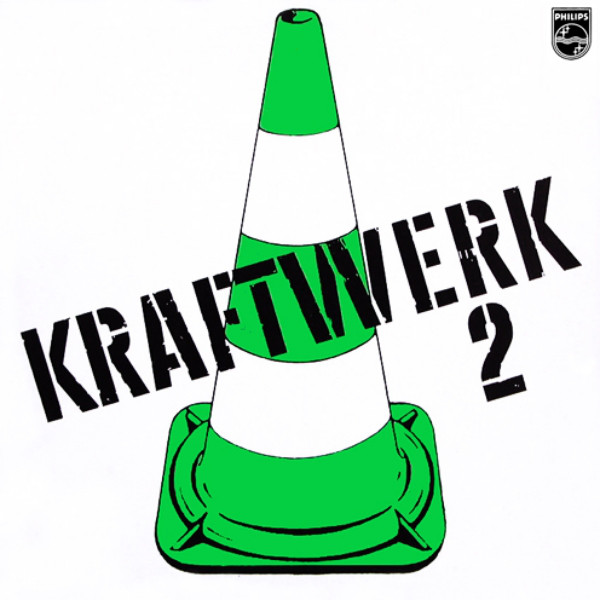
This month 48 years ago KRAFTWERK released their second studio album KRAFTWERK 2
Kraftwerk 2 is the second studio album that was released under the moniker Kraftwerk. The album was written and performed by founding Kraftwerk members Ralf Hütter and Florian Schneider in late 1971, with the sessions produced by the influential Konrad "Conny" Plank. It was released by Philips in January 1972.
Hütter later commented in an interview: "Nobody wanted to play with us because we did all kinds of strange things...feedbacks and overtones and sounds and rhythms. No drummer wanted to work with us because we had these electronic gadgets."
Although one should expect the obvious, this album features no synthesizers, the instrumentation being largely electric guitar, bass guitar, flute and violin. The electronic tricks and experiments both gentlemen display here belong to the realm of 1960s tape-based music, with heavy use of tape echo, reverse playback and tape speed effects. Overall, the sound has a rather muted, twilit, dusky feel, similar in feel to "Megaherz" on Kraftwerk's debut album, as Hütter and Schneider explored the possibilities for electronic and auto-mechanical enhancement of their music.
The lengthy, almost side-long "Klingklang" which opens the album is notable for its use of a preset organ beatbox to provide the percussion track. A term which would later be used as their fifth virtual member in the shape of a recording studio.It starts with a clangourous Stockhausen-like metallic percussion montage and gives rise to the unmistakable Kraftwerk sound. Later, the song title also became the name of the band's own self-built studio, in Düsseldorf. "Atem" is a recording of breathing, while "Harmonika" features a tape-manipulated mouth organ.
The cover design, by Ralf and Florian, further hints at conceptual art, being a repeat of the first album's pop art design – except this time fluorescent green replaces the red and the number '2' is added.
No material from this album has been performed in the band's live set since the Autobahn tour of 1975, and to date, the album has not been officially reissued on CD. The band is seemingly reluctant to consider the release as a part of their legacy
In interviews, Schneider described the first three Kraftwerk albums as "archaeology".
KRAFTWERK 2
A1. Klingklang 17:36
A2. Atem 2:57
B1. Strom 3:52
B2. Spule 5:20
B3. Wellenlänge 9:40
B4. Harmonika 3:17
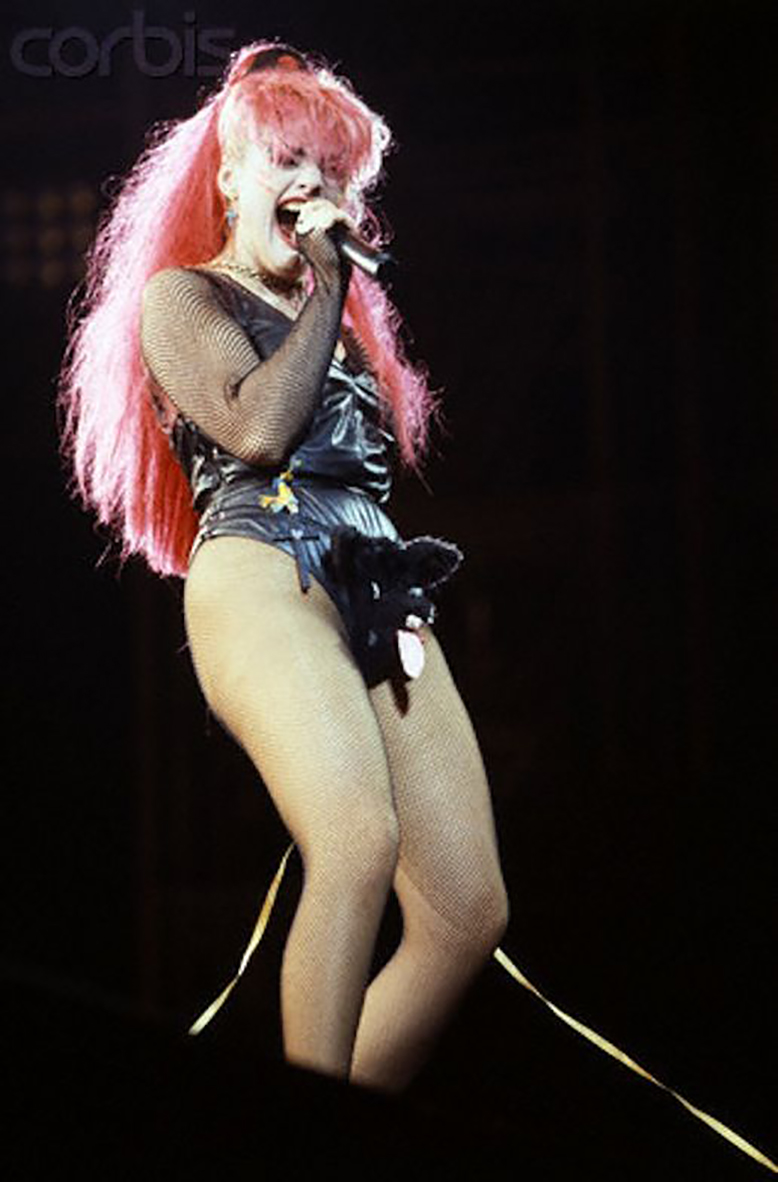
On this day 35 years ago, Nina Hagen performed in front of 1,5 million people on the first edition of world’s biggest festivals Rock in Rio (Brazil).
35 years ago, on 11 January 1985 Nina Hagen performed in front of 1,5 million people on the first edition of world’s biggest festivals Rock in Rio (Brazil). The festival lasted 9 days while most of the headliners performed on two different nights. Nina Hagen’s second performance was on the festivals last day, 20 January 1985.
A special 250.000 m2 site was built especially for this event with a stage of a stunning 5000 m2, two shopping centers with 50 stores, two medical first aid centers and became know as Cidade do Rock or City of Rock.
Rock in Rio 1985 Line-up (Alphabetically)
• AC/DC
• Al Jarreau
• The B-52's
• George Benson
• The Go-Go's
• Iron Maiden
• James Taylor
• Metallica
• Nina Hagen
• Ozzy Osbourne
• Queen
• Rod Stewart
• Scorpions
• Whitesnake
• Yes
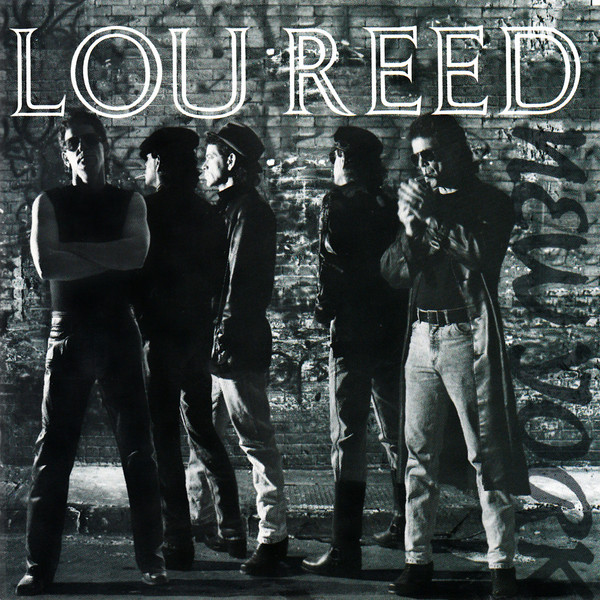
New York, both the backdrop and inspiration to some of Lou Reed's finest work, from the Velvet Underground's debut and right through his solo work,with the exception of the hard listening,and at times upsetting 'Berlin' album.
In 1989 however, Reed stunned both critics and fans with the release of the loose conceptual album simply titled 'New York'.
This was Reeds finest album as a solo artist and nobody seen it coming,having released albums of moderate appeal but poor reviews in the 1980s.
After his clean up and stint in rehab Reed was written off as a has been, hanging onto the shirttails of cult success with the Velvet Underground, which at this point was at its highest.
As the decade closed however Reed found himself on the cusp of both artistic integrity with mainstream success. The fourteen track album,a journey through the grime and good of New York City, cited as an almost spoken novel weighted in at a little under an hour ,with minimal production to add to the raw sound ,this was Lou Reed at his very best.
A band made up of two guitars,bass and drums,the vehicle he thrived on to snarl his vocals over both sides of the record,indeed ex-Velvet Mo Tucker contributed drums on parts of the album.
The sudden change and obvious maturity that fired Reed can be contributed to by two factors,or two losses rather,the death of Andy Warhol in February 1987 during a routine gallbladder surgery.
Warhols was of course the one time artistic guru of Reeds who not only encouraged his dark , twisted songwriting but influenced it and his ex-Velvets bandmate and muse Nico who suffered a heart attack and died in July 1988 in Ibiza.
These two losses in a short space of time made Lou Reed question his own mortality, instead of grieving he in turn threw himself into his songwriting, evident in the song cycle that this is clearly a man who had seen it and done it all and was now launching himself at the top of his game with an almost rebirth.
The album stutters to a start with one of Reed’s greatest songs,'Romeo Had Juliette', here he clearly sets the scene and prologues all that is to come;
"Caught between the twisted stars the plotted lines the faulty map
that brought Columbus to New York".
This vivid imagery used very easily paints pictures in the listeners mind in almost fictional noir movie.
The second single release ,'Dirty Boulevard’ reached the top of the modern rock U.S Billboard charts, a song starkly pointing the divide between the rich and poor of New York,but again widely praised and receiving airplay both through FM and MTV, this was not selling out however, grunge was right around the corner and Reed was already lighting the fires hailing the clever lyrics and guitar driven raw music which was to come.His friend and one time collaborator David Bowie,was already working in the same direction with the cyberpunk of Tin Machine.
The song subjects are both stark and nostalgic and at times the imagery can become overpowering, he keeps it together however through the pumping sound being delivered,'The last great American whale', Reed hits out at both the NRA and the treatment of native Americans,fearlessly without hiding either fact;
"The mayor's kid was a rowdy pig
spit on Indians and lots worse,
The old chief buried a hatchet in his head
life compared to death for him seemed worse".
Halfway through the album you soon discover that Reeds newfound leather skinned,sobriety suits him,a fact pointed to on the third single release ‘A Busload Of Faith', it's not a song of regret but more so of acceptance and the importance of his own life;
"You can't depend on your drinking,
You can't depend on your dope".
At last Reed was living up to the cult image created through his groundbreaking and highly influential releases with the Velvet Underground, this new found energy would continue right up until his death in 2013, leaving behind a more worthwhile legacy for a man who through his work in the 60's inspired more bands than the Beatles.
[Kevin Burke]